


How to choose a cat litter box: size, cleaning and 4 models
A practical guide to measuring your cat and space, choosing a design, planning cleaning and comparing four distinct cat litter boxes.
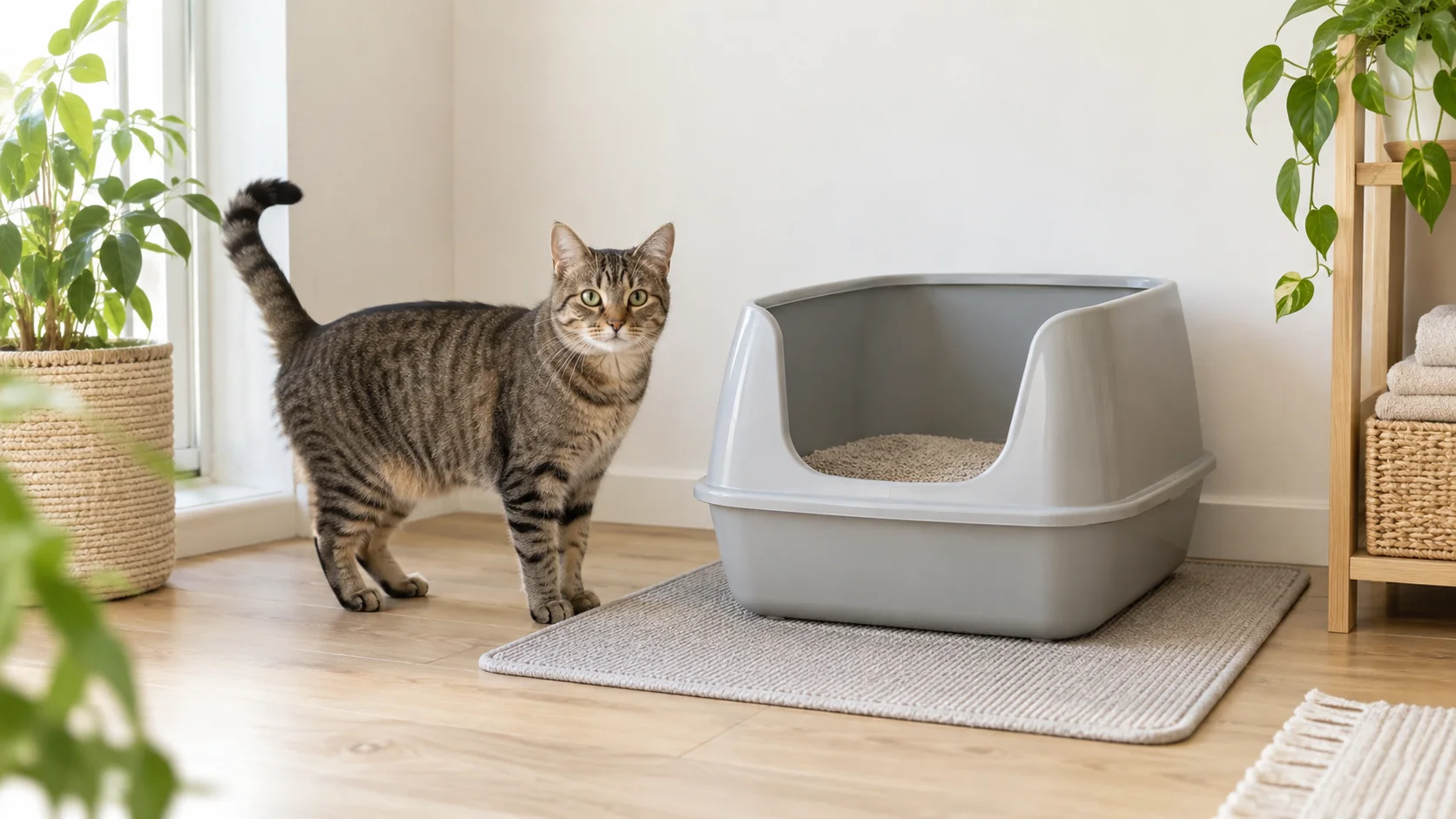
The right cat litter box should give your cat enough room to enter, turn and dig while remaining easy for you to clean. Overall dimensions tell only part of the story: the usable interior, entrance height, wall shape and clearance needed to open a lid, drawer or cabinet all matter. This guide explains how to measure your cat and the available space, then compares four distinct designs from the Bonideco cat litter box range.
Quick choice: an open box with high sides suits cats that dislike enclosed spaces and makes daily checks simple; a hooded box can contain more scattered litter when the entrance suits the cat; a longer model provides more turning room; a litter box cabinet blends into the room but its internal dimensions and opening must fit both the tray and the cat.
Cat litter boxes: comparison of 4 different designs
These four PawHut models cover different needs: an open stainless-steel tray with high sides, a compact hooded plastic box, a longer enclosed design with a metal base, and a furniture-style cabinet. Dimensions and included parts were checked against the Bonideco catalogue on 23 September 2026. This is a comparison of declared specifications, not a hands-on test. Current price, delivery and availability appear in the product cards.
| Model | Dimensions | Design | Worth considering when |
|---|---|---|---|
| PawHut D31-114V00LG | 60.2 × 40.6 × 29 cm | Open metal tray, high sides, step and scoop | Your cat prefers an open box but tends to scatter litter over low edges |
| PawHut D31-050V00WT | 43 × 44 × 47 cm | Compact hood, front door, pull-out base and mat | A small cat needs an enclosed box in a limited space |
| PawHut D31-103V00WT | 40.5 × 60.5 × 41.5 cm | Longer enclosure, metal base, litter-catching grid and scoop | A cat up to 6 kg needs more length and an easy-to-wash base |
| PawHut D31-089V00AK | 78 × 50 × 51 cm | Cabinet with pull-out compartment and litter-catching mat | You want to conceal a separately selected tray and have drawer clearance |
Remember: outside dimensions do not equal usable space. A hood, double walls, grids and mechanisms reduce the interior. With a cabinet, compare its 55 × 47 × 42 cm compartment with the outside of the exact tray and leave enough clearance to grip, insert and remove it.
How to measure your cat and the space for a litter box
Judge the usable interior, not only the footprint
Measure your cat from the nose to the base of the tail while it stands naturally. Inside the box, it should be able to enter, turn, choose a spot and cover waste without pressing its back or head against the walls. A large or long-bodied cat, or one that circles before settling, needs a more generous interior. A manufacturer’s weight recommendation helps compare models, but it cannot replace body-length and posture checks.
For a hooded box, check the entrance width and height separately. A young agile cat may manage a higher threshold, while a kitten, senior or cat with limited mobility usually benefits from a lower step. A swinging flap must not catch or frighten the cat. If the design permits, some cats accept a new box more readily when the flap is removed at first.
Mark the full working area on the floor
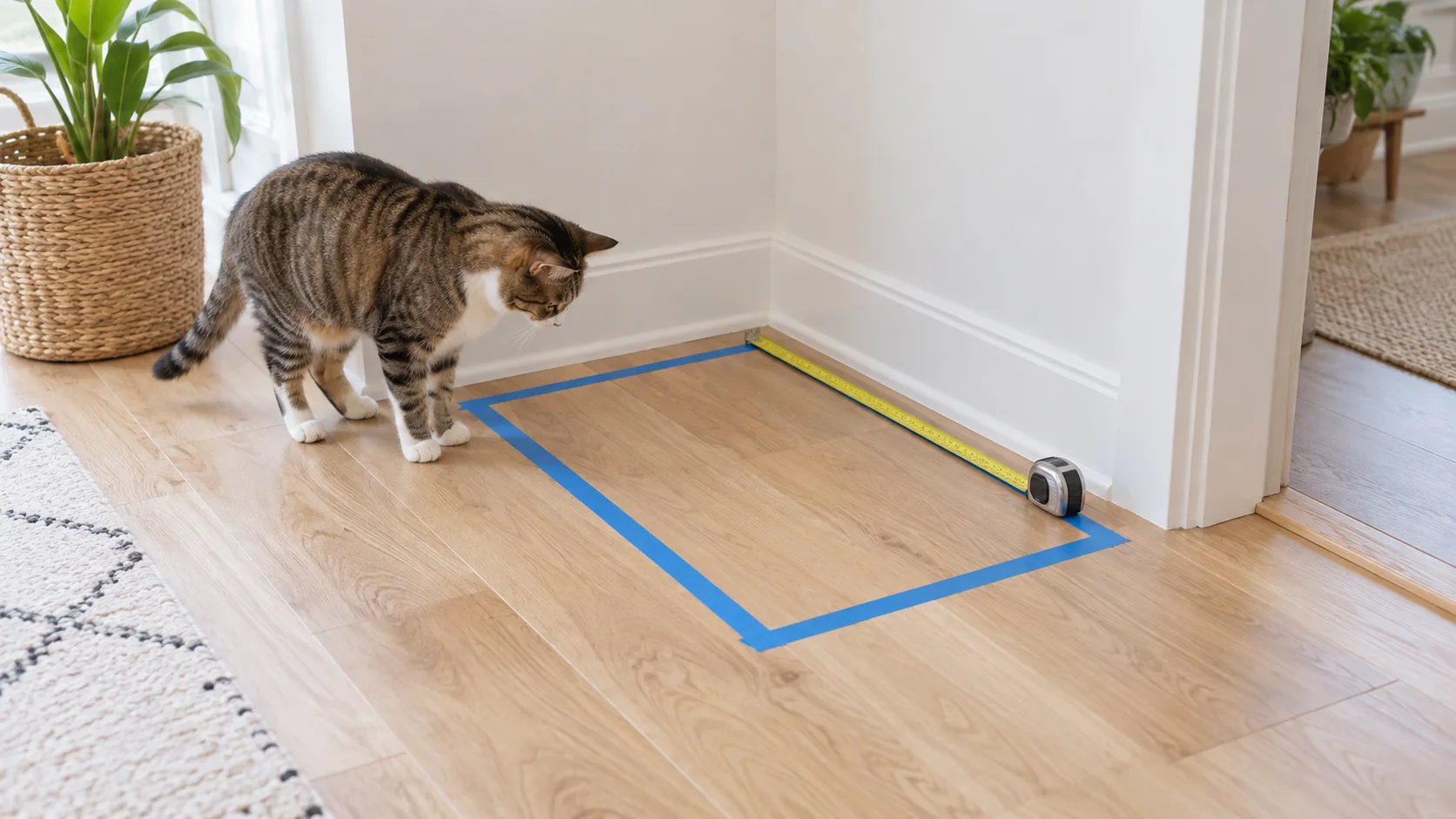
Use removable painter’s tape to mark the product width and depth. Add room in front for the cat to enter and for you to stand, scoop and pull out a drawer or cabinet section. Check doors, skirting boards, radiators, robot vacuum paths and walking routes. The box should sit flat without narrowing an everyday passage.
A 78 × 50 cm cabinet needs more than its static footprint. Allow the pull-out section or door to open and make sure the litter tray can be lifted out. A hooded box also needs enough space above it if the top must come off for washing.
Choose a location that works throughout the day
Pick a calm, accessible and ventilated place where appliances or frequently opened doors will not startle or trap the cat. Keep food and water in a separate area. In a multi-cat or multi-storey home, a single box in one location can create queues or allow one cat to block another; several accessible locations are usually more practical.
Open or enclosed cat litter box: which should you choose?
Open tray with high sides
An open box makes it easy to see when litter needs attention and to notice changes in use. It suits a cat that distrusts hoods or wants a clear view of the room. High sides contain part of the litter kicked while digging, although granules can still leave through the entrance. A suitably sized mat placed along the exit route can help.
The D31-114V00LG combines a stainless-steel tray with removable high walls. Its 60.2 cm length gives more room than a compact box, and the 13.8 cm side panels are intended to limit scatter. Check whether the overall 29 cm height and entrance step suit your cat. The catalogue recommends this model for cats up to 4.5 kg.
Compact hooded box
A hood contains more of the litter thrown during digging and visually separates the toilet area from the room. It does not suit every cat, particularly one that dislikes a narrow entrance or enclosure. A cover does not remove the need to clean: litter depth, daily scooping and airflow matter more than simply closing the box. Maintain and replace any filter as directed.
The 43 × 44 × 47 cm D31-050V00WT has a front flap, pull-out lower section, mat and scoop. Its doorway is approximately 18 × 22.5 cm, so compare it with your cat’s shoulder width and preferred way of entering. This is a compact option for a small cat; a 43 cm outside width does not guarantee enough interior space for a long or broad animal.
Larger enclosure with a metal base
The D31-103V00WT is 60.5 cm long. The catalogue lists an interior area of about 36.5 × 56.5 cm and suitability for cats up to 6 kg. The metal base can be washed, and the entrance grid catches some litter from the paws. Weight alone is not decisive: compare the doorway, interior height and turning room with your cat.
Litter box furniture
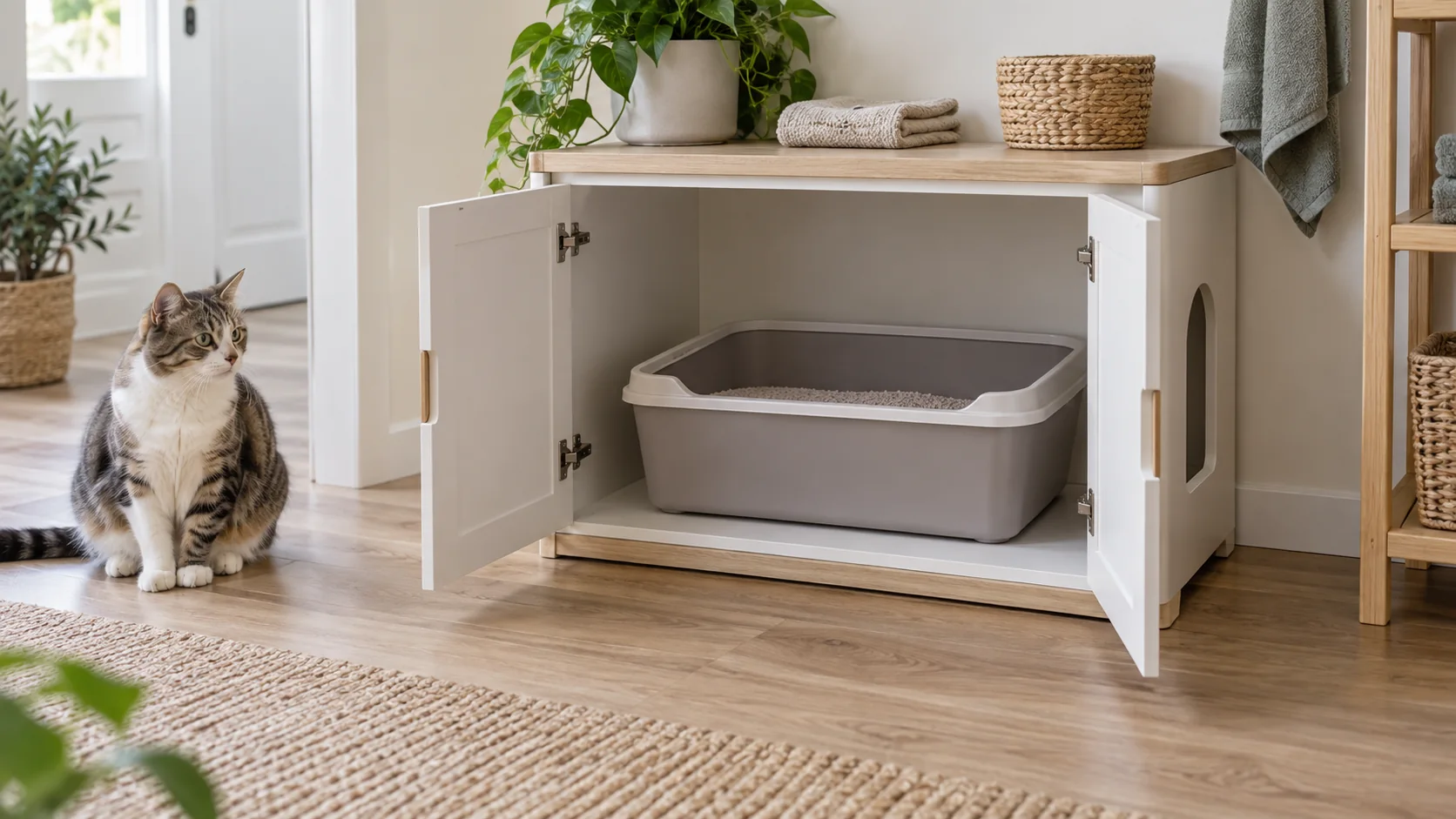
A cabinet can conceal a separate tray and double as a side unit, but compatibility must be checked in centimetres. The D31-089V00AK provides a 55 × 47 × 42 cm inner compartment. The tray must be smaller, with enough space around it to grip and lift it out. The entrance and any turn inside must also accommodate the cat.
The cabinet does not replace the tray or reduce cleaning needs. Protect wood-based surfaces from moisture, wipe spills immediately and ventilate the compartment regularly. The catalogue lists the unit for cats up to 5 kg; assembly is required.
How to choose a litter box that is easy to clean
Check how every corner is reached
Good access matters more than a long feature list. An open tray is reached from above. With a hooded design, check whether the base slides out, the top comes off easily and joints leave any awkward recesses. In a cabinet, you should be able to lift the whole tray out without tipping it.
Stainless steel is non-porous and simple to rinse, but it still needs regular washing and thorough drying. Plastic is lighter; clean it with non-abrasive products to avoid scratching the surface. Follow the care instructions for the exact item and avoid strongly scented cleaners that may discourage the cat from returning.
Plan daily and periodic care
Remove clumps and solid waste daily, or more often when several cats share the box. How often litter needs topping up or fully replacing depends on its type, box size and use. Periodically empty the box, wash it according to the instructions, dry it and only then add clean litter. A consistent routine is more dependable than claims that a hood or filter will eliminate odours.
An entrance mat collects some granules, but its size and texture should suit the litter and the cat’s paws. Shake out and wash it regularly. If litter always escapes from the same side, watch how the cat digs: a higher wall may help, but sometimes the real solution is a larger box or a different orientation.
9 checks before buying a cat litter box
- Measure the cat. Compare body length, shoulder width and mobility with the interior and entrance.
- Mark the location. Recreate the footprint on the floor and add a cleaning zone.
- Test opening clearance. A drawer, hood or cabinet section must open fully.
- Assess the threshold. A high entry may not suit a kitten, senior or cat with limited mobility.
- Follow the cat’s behaviour. Choose an open tray if it avoids hoods; look for high sides if it digs vigorously.
- Plan cleaning. You should reach corners, remove the base and wash any extra grids.
- Check materials. Consider washing, drying and resistance to moisture.
- Match cabinet and tray. Compare inner and outer dimensions and leave room to remove the box.
- Read the exact product page. Colour or package variants may have a different SKU and dimensions; confirm current details before ordering.
Once these checks are complete, browse all Bonideco cat litter boxes and shortlist by usable size and design first. Choose colour and appearance among the models your cat can enter comfortably and you can maintain without difficulty.
Frequently asked questions about cat litter boxes
What size litter box does a cat need?
The cat should enter, turn and dig without pressing against the sides. Use its body length and shoulder width, then check the opening and internal height of an enclosed model. Outside dimensions are only a starting point.
Does an enclosed litter box control odour better?
A hood may limit how quickly odour spreads into a room, but it can also concentrate it inside. Daily waste removal, sufficient litter, periodic washing and ventilation have the largest effect. Service the filter according to its instructions.
How can litter tracking be reduced?
High walls, an entrance grid and a suitably sized mat can collect some granules. Also check whether the box is too small: a cat in cramped space may push more litter over the edge.
Can a hooded litter box go inside a cabinet?
Only when there is clearance on every side, the doorway stays unobstructed, ventilation is adequate and the box can be removed without tipping. Compare exact internal and external measurements; two suitable products do not automatically fit each other.
How many litter boxes are needed for several cats?
A common practical starting point is one box per cat plus one extra, placed in separate accessible locations. Watch for blocking or waiting and adjust the number to the home and the cats’ behaviour.
How do I introduce a new litter box?
Place it in a calm, familiar location and initially use the cat’s usual litter. Let it explore at its own pace, keep the box clean and do not punish accidents. If a cat suddenly stops using the box or its toilet habits change, consult a veterinarian.